Grandma’s Blanket
2026
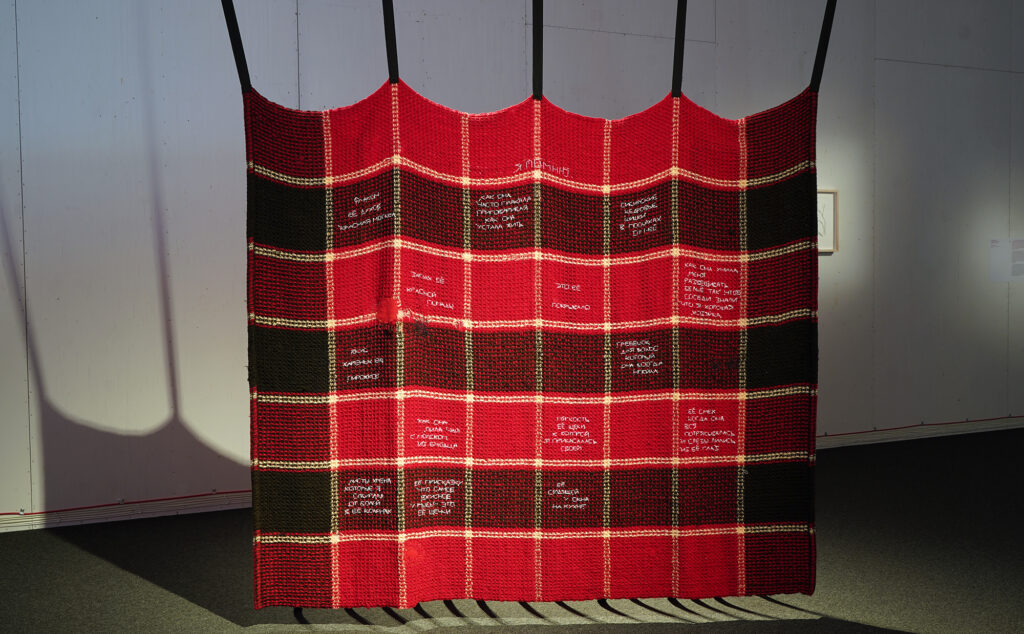
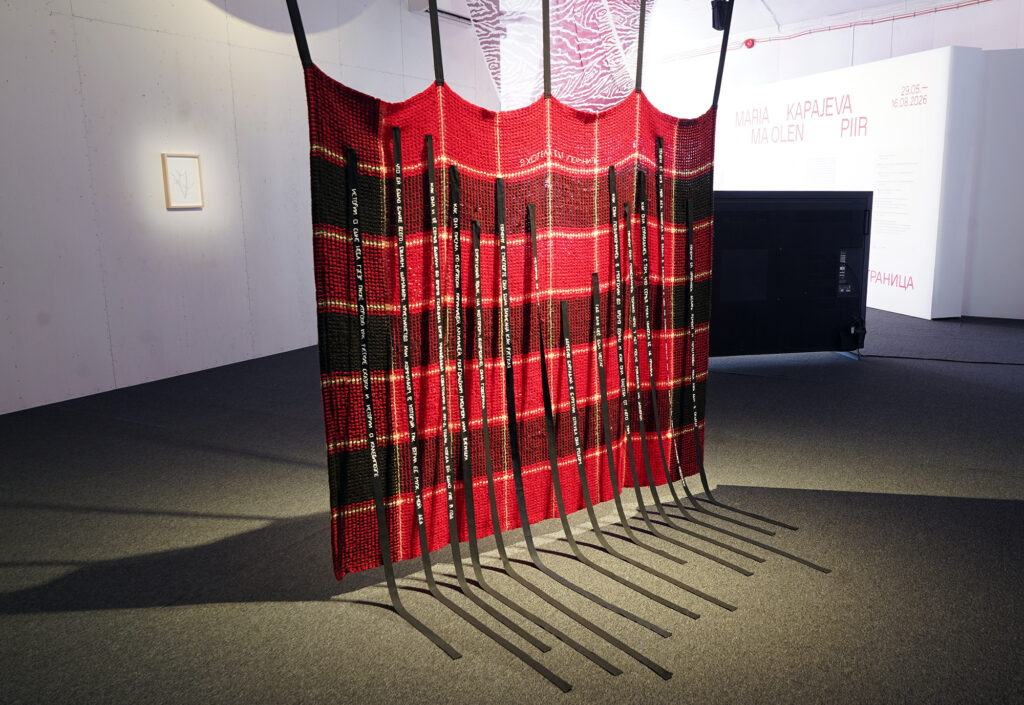
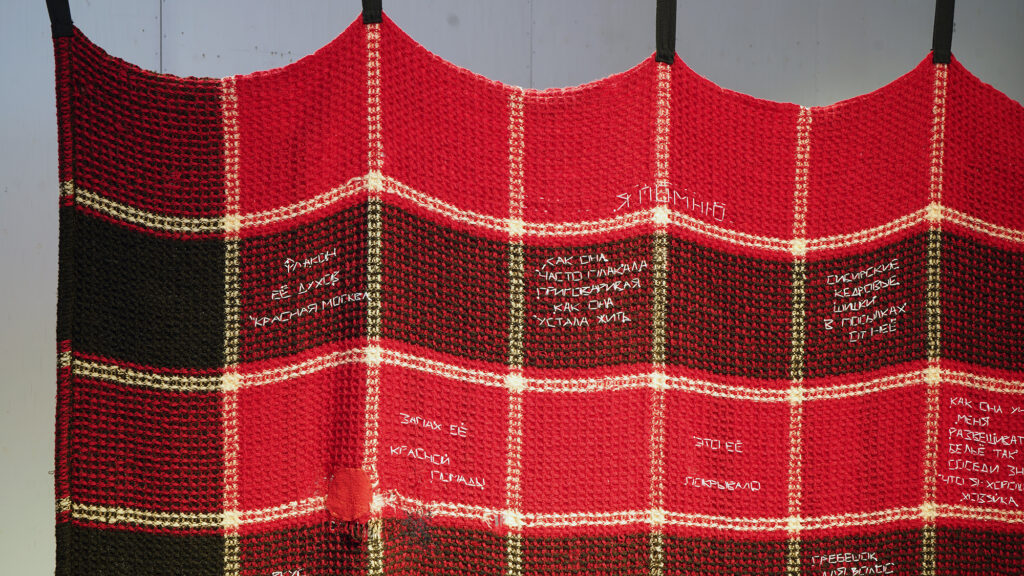
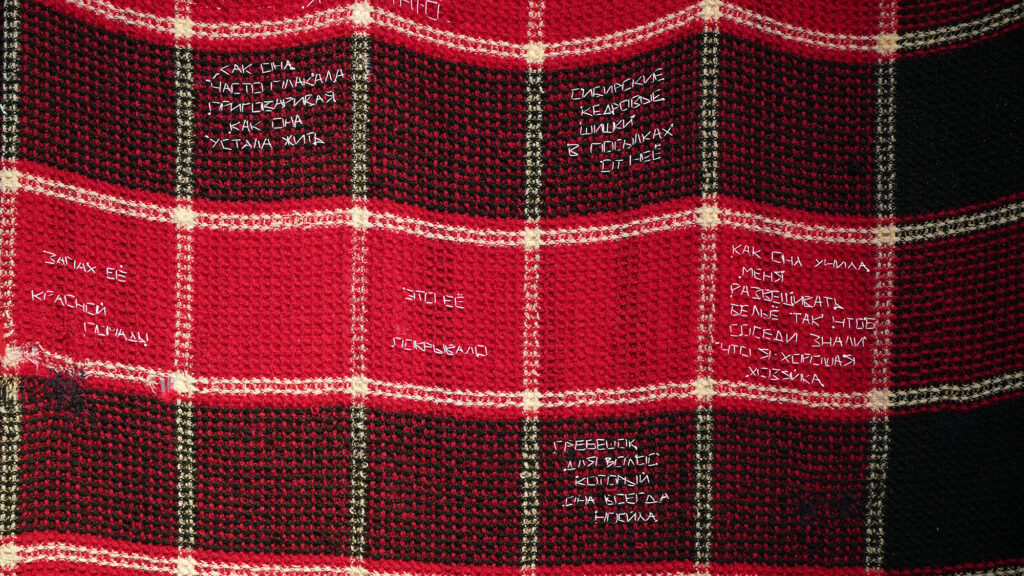
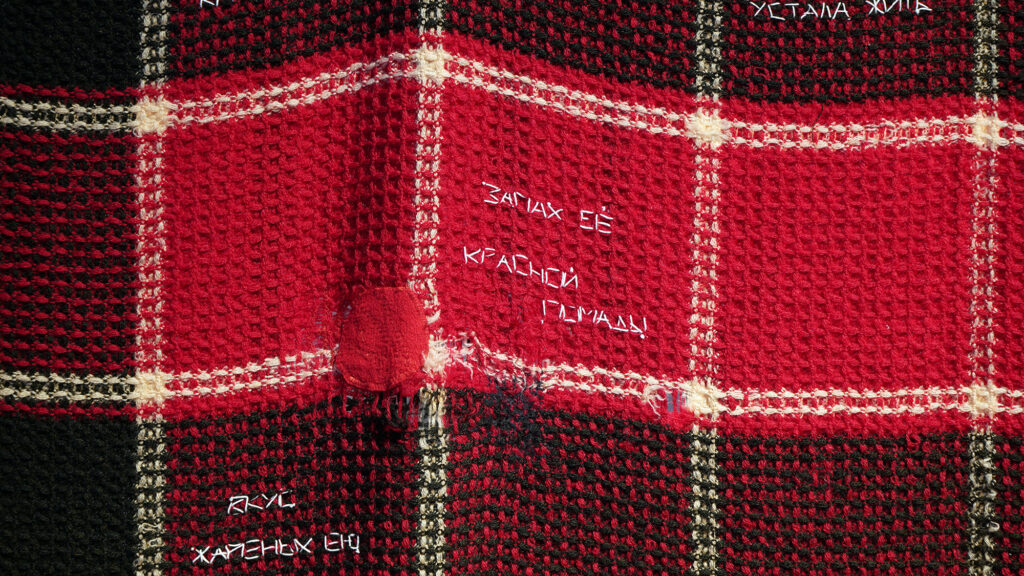
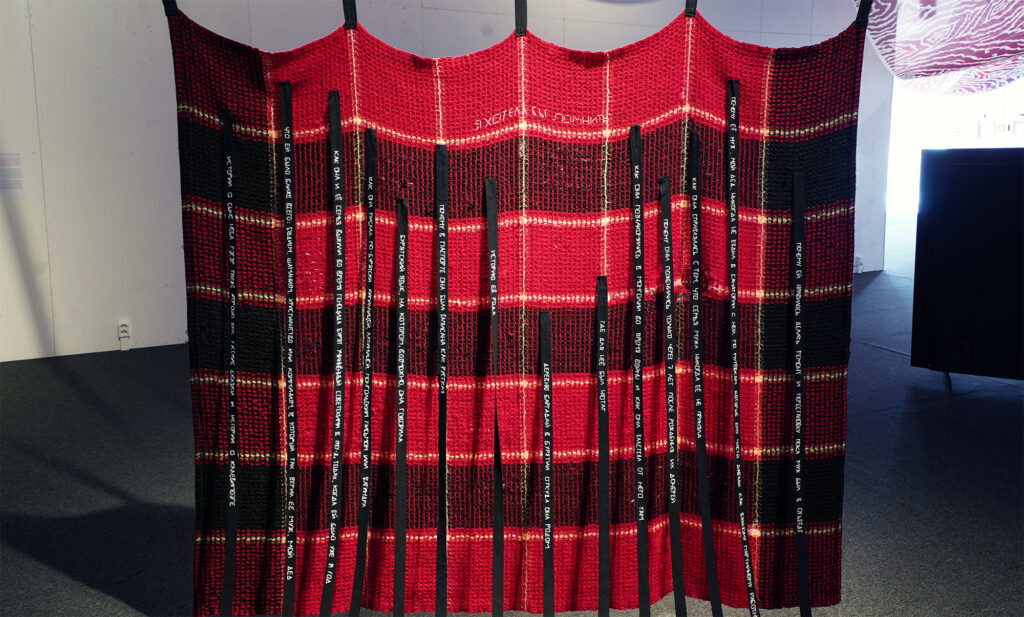
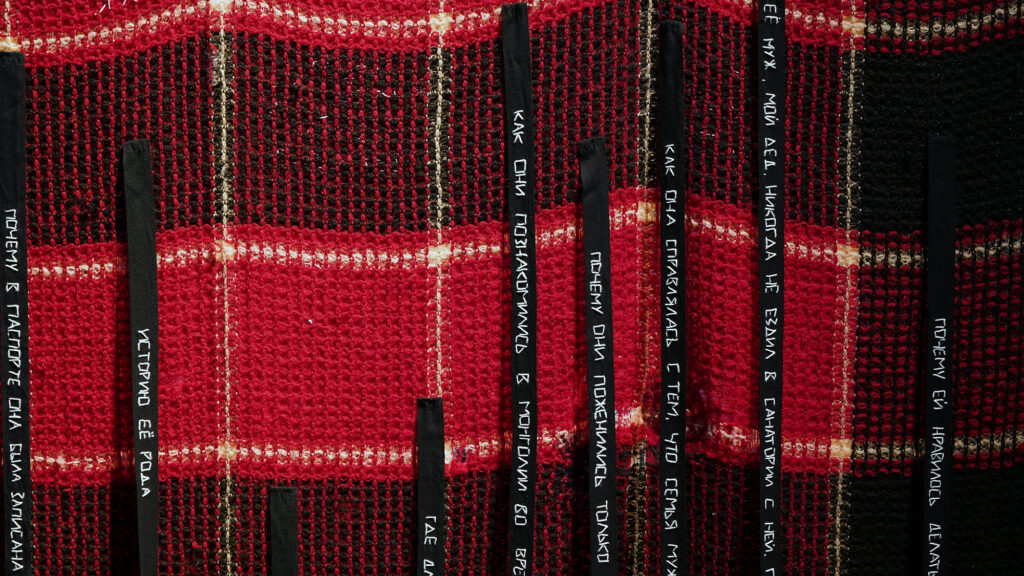
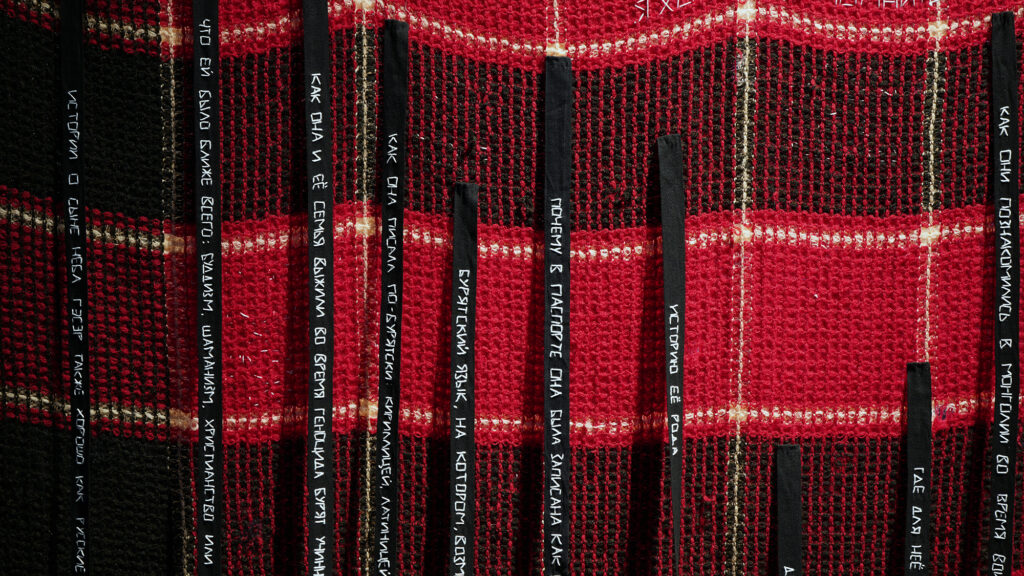
Existing object, hand-embroidered, 270×167cm
The work is made from my grandmother’s blanket, the only object I have left from my maternal grandmother. She came from Buryatia, but her passport listed her nationality as Russian. The Buryats are an Indigenous people living near Lake Baikal who, following the collapse of the Russian Empire, unsuccessfully sought independence. Under Soviet rule, their traditional nomadic way of life was dismantled and increasingly harsh Russification policies were imposed. Thousands of people were executed or imprisoned, including members of the national leadership and intellectual class. Buddhist monasteries were destroyed, and the Mongolian script was replaced with Cyrillic.
My grandmother was only 21 during the bloodiest year of the repressions, in 1937. She never spoke about her childhood and youth in Buryatia. Even the blanket I have inherited is not handmade, but a mass-produced Soviet-era object. It makes me think about how industrialisation and Soviet policies disrupted the transmission of craft traditions, skills and cultural knowledge between generations.
Through embroidery and sewing, I have intervened in the blanket, stitching my memories and sensations connected to my grandmother directly onto one side. On the other, I have attached black ribbons carrying “non-memories”: the questions I wish I had asked her, things I can no longer know. I embroidered in Russian, a language that is both my mother tongue, deeply personal and intimate, and a colonial language through which my grandmother’s own language was erased. Working with the blanket becomes a way for me to approach this silence and the complicated inheritance of a language and history that are both mine and not entirely mine.